Unsecured Public Wi-Fi: A Hacker's Playground
Public Wi-Fi networks, while convenient, often lack robust security measures, making them prime targets for cybercriminals. These open networks can be easily monitored, allowing attackers to intercept sensitive information transmitted by unsuspecting users.
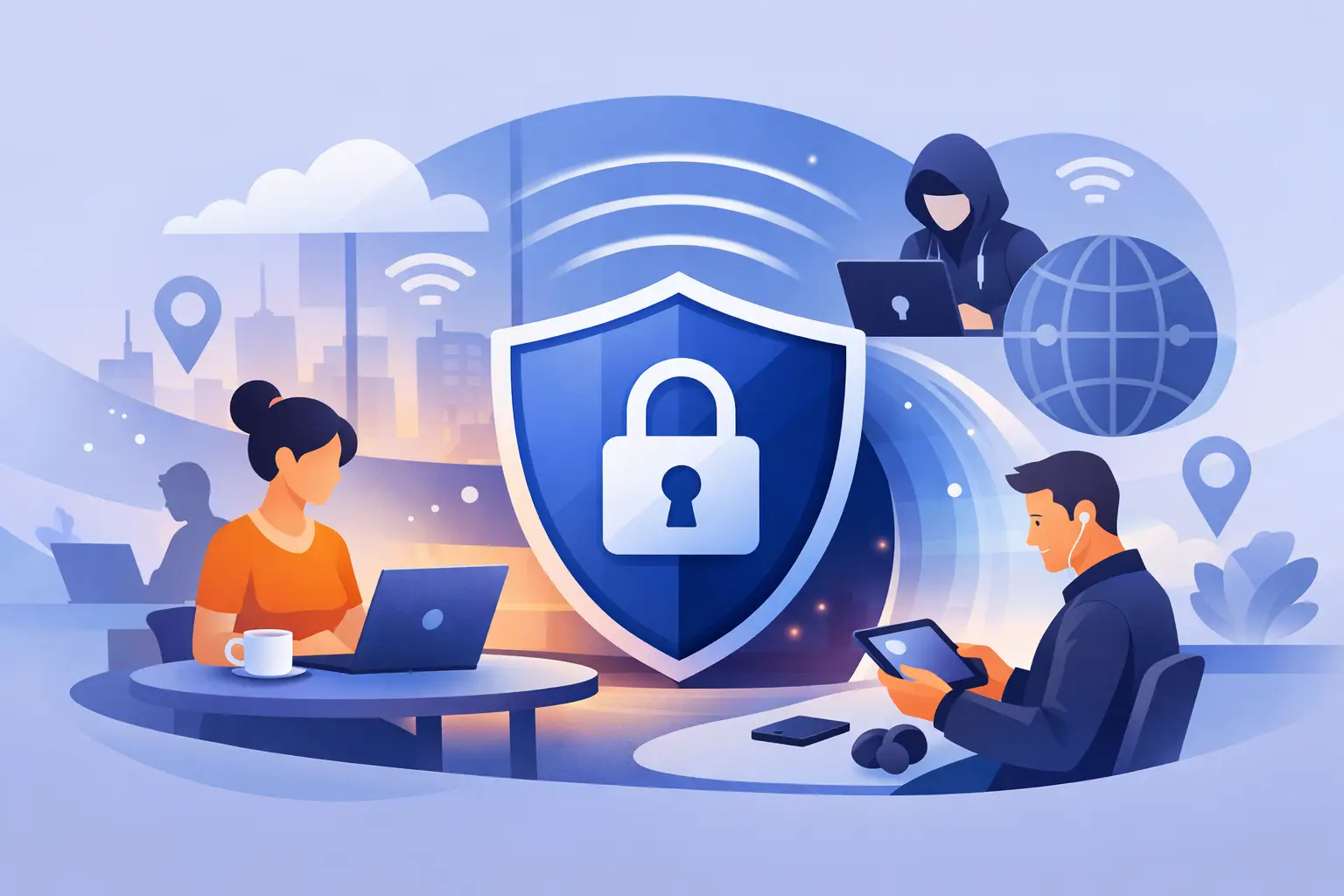
From coffee shops and airports to hotels and libraries, free Wi-Fi hotspots are ubiquitous. However, the ease of access comes with significant risks, including man-in-the-middle attacks, malware distribution, and session hijacking, all of which can compromise your personal data.
The Dangers of Data Snooping on Public Networks
Data snooping occurs when unauthorized individuals intercept and read your online communications. On unsecured public Wi-Fi, this is alarmingly simple for hackers who can set up fake hotspots or exploit vulnerabilities in legitimate ones.
This illicit monitoring can expose a wide range of sensitive information, including login credentials for banking and social media, personal messages, browsing history, and even credit card details, leading to identity theft and financial fraud.
How Encryption Shields Your Online Activity
Encryption acts as a powerful shield for your online activities, transforming readable data into an unreadable code that can only be deciphered with a specific key. This process is crucial when using public Wi-Fi.
By employing advanced encryption protocols, such as those found in VPN services, your internet traffic is routed through a secure tunnel. This ensures that even if your data is intercepted, it remains unintelligible to anyone without the decryption key, safeguarding your privacy.